
疑犯追踪
'I felt like I just started my career again': British Elvis revivalist finds his voice in China_我的网站

A | 南海风云:海警船受损背后的深层思考 近日,一组震撼的画面席卷网络,我国海警船与菲律宾船只在仁爱礁附近的对峙中,船体竟遭到撞击,留下三处明显损伤。
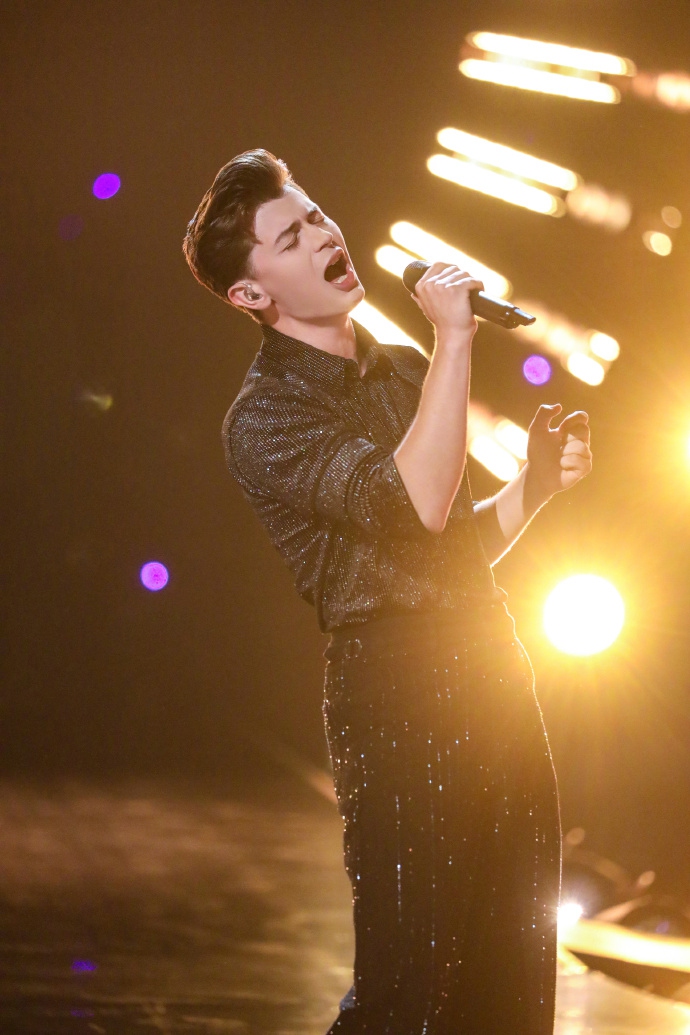
Elliot James Reay could have copied every other Western act and sung a Taylor Swift cover. Instead, he took 1950s rock'n'roll to a live TV show where autotune is switched off and discovered a version of fame that Britain has forgotten.
Elliot James Reay was traveling in the US, trying to finish a song, when his manager called. There was an invitation to join Singer 2026, a prime-time live music show in China. Reay didn't hesitate. He had traveled the world before he was a full-time musician, but had run out of money before reaching China. "I went everywhere but China," he said while sitting for an interview with the Global Times, sitting in the office of his label in Beijing, from which the Palace Museum can be seen not far away.
Reay is, in the West, a very 2020s kind of artist. He began posting short covers on short video platform TikTok in 2019; during the UK Covid lockdown, he chose to focus on growing his fan base. He now has millions of followers across platforms, and his debut single notched 10 million views before it was even released. In the British industry, this is both a leg-up and a trap. "You can have all the followers," he says, "but they don't guarantee people will buy tickets."
In China, that equation flipped.
Nervous again
The Chinese show, Singer 2026 is broadcast completely live, with no pitch correction. For Reay, who had played enough small gigs to feel comfortable in his own skin, it was a shock. "I haven't felt nerves in a long time," he says. "But I've never been in a competition before. To have my singing judged against other people made me really nervous."
He watched Week One's performances from the wings and saw why. "The standard was terrifying," he says.
But the format, he admits, is something the UK no longer has: a televised singing contest that treats vocal ability as a public event, not a pre-packaged product. "It made me feel like I just started my career again."
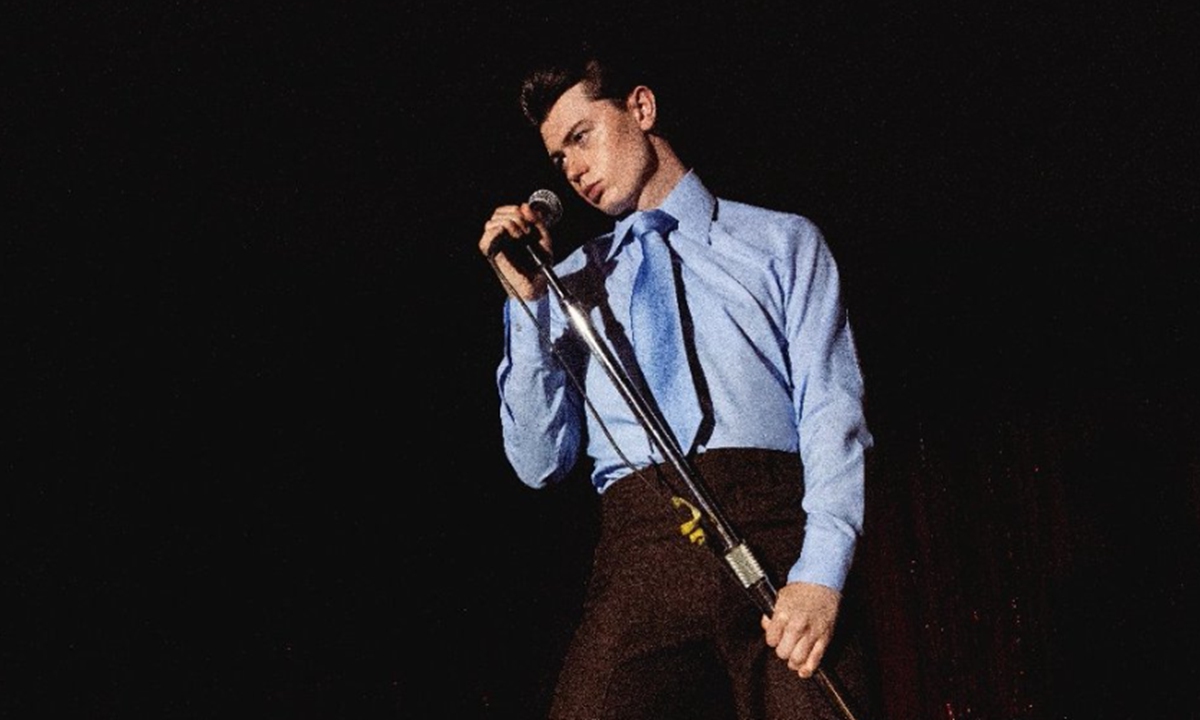
Reay's lane is retro. Not as pastiche, but as lineage. He wears the silhouette of Elvis Presley, sings in the grain of 1950s pop, and writes songs that sound like they were cut from a Sun Records demo. He could have sanded it down for Chinese audiences, but he didn't.
"Someone has to start the wave before you can see it," he says. Among the songs he performed were "Unchained Melody" and his original track "I Think They Call This Love," which he co-wrote with his girlfriend. He points out that the Beatles still sit next to Taylor Swift on the radio, and that pop started in the 50s. "It's the foundations of pop," he says.
Learning to feel the words
In the final, Reay performed a bilingual version of the Chinese song "Hou Hui Wu Qi" (The End of the World). It was his first time singing in another language. He spent five days learning the Chinese lyrics, listening to the original on loop.
"There are sounds in Chinese we just don't have in English," he says. "I couldn't hear the difference at first. I'd say it, and Helen (his translator) would say, 'No.' I thought I was saying the same thing." Eventually, he stopped trying to hear it and started trying to feel it. "It became more about how it felt to say it. How I place my tongue in my mouth," he says.
He didn't understand the meaning until day three. "Helen gave me a card with the Chinese characters and the English translation. It's very poetic," he says. The performance received a strong reaction, with it being called an attempt at "cultural fusion."
He had saved his own original, "I Think They Call This Love," co-written with his girlfriend, for the same final. He had held the song back deliberately. "I knew that any week was my last week," he says, "but I knew that if I made it to the grand final that I had to do it then." He had no idea it would become the last song of the entire show.
When he finished, he walked straight off stage, took his girlfriend's hand, and the two of them left together, a moment that trended on Chinese social media that night.
The song is about the exact point they realized they were in love; it was also the first track of his career he fully believed in and pushed into the world. Having her there to watch it live, after weeks of her only seeing performances on a phone in a hotel room, "tied the whole thing in a bow at the end."
A touring musician, not a TikToker
Reay is open about the tension between his origin story and his ambition. "I don't want to be a TikTok celebrity," he says. "I'm a musician. I want to tour."
The platform gave him an audience, but it also boxed him in. He remembers friends who wrote incredible songs during lockdown, while he chose to build a fan base. Now, he says, some of those friends have had to stop writing and make TikTok videos instead.
China, he says, gave him permission to be both an online creator and a live performer. Universal Music, his label, didn't push him to chase trends. "They never said, 'Do this, do that,'" he says. "They supported what I wanted to sing, and then they made it the best version they could."
Before Reay, a string of international artists had already found warm receptions and career-shifting opportunities in China. Kazakhstani singer Dimash Kudaibergen, Malaysian star Shila Amzah, US country artist Mickey Guyton, British vocalist Jessie J, and French singer-songwriter Joyce Jonathan all won large Chinese audiences through high-profile television appearances and live performances, each using the platform to open a new chapter in their careers.
He's already planning a return. He wants to bring a tour. He wants to buy the traditional instruments he saw on set and take them home to England. "I'm going to learn how to play them," he says, "and maybe put them into my music."
The advice he'd give other Western artists looking East is to stay loyal to yourself. "Be yourself," he says. "It's very easy to want to change yourself to fit into a market, but at the end of the day, if you stay true to yourself, you'll be happy."
"In the UK, I felt like I needed to do other things to make other people happy," he says.
"If I hadn't stopped doing that, I wouldn't be sitting here. I wouldn't have done the show. My whole journey would be different," he says.
。看到这张张图片,我心头涌起一股复杂的情绪,既是对海警官兵的敬佩,也是对南海局势的担忧。他们坚守在祖国南大门的阵地,用钢铁之躯捍卫着国家的领土权益,这份责任和担当,令人肃然起敬。 这次冲突,不仅仅是简单的船只碰撞事件,更像是一面镜子,映照出我国海警力量在面对日益复杂的南海局势时所面临的挑战。菲律宾那艘排水量小于我国海警船的巡逻艇,竟能造成如此严重的损害,这令人不得不重新审视海警船的防护能力,以及我们在南海执法时所需要的硬实力。 细想一下,如今执行南海任务的海警船,很多都是由海军舰艇改装而来。

B | 当初将这些海军舰艇,特别是056型轻型护卫舰,改造成海警船,无疑是一种权衡利弊的选择,旨在快速提升海上执法能力。然而,这些舰艇的设计理念,最初并非为了承受猛烈的物理撞击,而是强调通过火力网进行被动防御。

C | 它们的核心结构和防护设计,仍然沿用了海军舰艇的特点——相对单薄的衬板材料,无法抵御强烈的直接冲击。这就好比用一台跑车来承担工程车辆的任务,性能上肯定存在短板。 这次事件无疑敲响了警钟,必须正视我国海警船在部分海域面临的严峻考验。不能再心安理得地依赖这种权宜之计,而是要从根本上提升海警力量的防护能力。一方面,要对现有的海警船进行升级改造,强化船体的抗撞击能力;另一方面,更要着眼于未来,积极研发更符合海警需求的专用舰艇。 当然,海警船的升级改造,也并非易事。除了技术层面的挑战,还涉及到国际关系的复杂考量。改装后的海警船在外观上仍然保留着军舰的某些特征,比如武器和雷达等,很容易被误认为我方是在进行军事行动,从而引发不必要的误解和冲突。

D | 在处理南海问题时,我们必须保持高度的敏感性和谨慎性,避免因细节上的疏忽而将局势推向升级。 与此同时,我们也不能忽视菲律宾及其盟友的动作。面对我国在南海的坚定立场,菲律宾试图通过联合军演来施压,拉拢美国、日本和澳大利亚等国家,意图将南海问题国际化。这些国家,各有各的算盘,美国试图借机巩固其在亚太地区的霸权,日本和澳大利亚则希望借此扩大自身的影响力。

E | 然而,面对菲律宾的挑衅和外部势力的干预,我国解放军始终保持着高度的警惕和强大的应对能力。

F | 南部战区已经明确表态,将根据情况加强海空巡逻,这既是对菲律宾的威慑,也是对外部势力的警示。我们的底线,是维护南海地区的和平与稳定,捍卫国家的领土主权。 谁在南海搅局,解放军一目了然,绝不会任由他人随意摆布。如果菲律宾继续执意挑衅,妄图制造冲突,那么解放军绝不会手软,稍作动作,那些所谓的盟友恐怕会立刻望风而逃。 总而言之,南海局势的复杂性,呼唤着我们更强大的海警力量和更务实的战略思维。提升海警船的防护能力,研发新型专用舰艇,加强与周边国家的沟通,维护南海地区的和平与稳定,是我们义不容辞的责任。相信在全国人民的支持下,我国的海上力量必将更加坚强,能够更好地守护我们的家园。 维护国家主权,捍卫海洋权益,我们责无旁贷。

G | 感谢您的阅读,如有任何想法和建议,欢迎在评论区留言交流。点赞、关注是我前进的动力,让我们共同关注国家发展,见证中国力量!返回,查看更多。
Current article:http://x2f.shuazhepenxingshuaisenqienai.buzz/5iyr9f/7yw5e.html
Published on:15:50:17


