
{主关键词}
优酷
Filmmaker Vikram Bhatt Arrested With Six Others in Rs 30 Crore Fraud Case: Reports_我的网站

A | The Rajasthan Police arrested seven people on Sunday, among them filmmaker-director Vikram Bhatt, in connection with an alleged fraud case involving Rs 30 crore. The case was filed in Rajasthan, and the arrests took place on Yari Road in Versova, Andheri West. The Mumbai Police confirmed that this was not a joint operation.Sources say that the director was arrested at Ganga Bhavan Apartment at his sister-in-law's residence. Notably, Bhatt had previously denied these claims in a formal statement, saying that the police have been entirely misinformed. A lookout notice had been issued for him approximately one week ago. According to the First Information Report filed at the Bhupalpura police station in Udaipur, the complainant, Dr. Ajay Murdia, who owns Indira IVF Hospital, stated that Vikram Bhatt and his associates enticed him into investing more than Rs30 crore in a film project. He was reportedly given assurances that the film would generate profits of up to Rs 200 crore.The project was initially planned as a biographical film, intended as a tribute to Dr. Murdia's late wife. However, the filmmaker is currently arrested, after his denial of allegations was revealed 20 days ago. This happened after the Udaipur police issued a lookout notice for the director, his wife Shwetambari Bhatt, and six other people, seven days ago.Dr. Ajay Murdia wished to honour his late wife by adapting her life story for the big screen. To find the ideal team, he contacted Dinesh Kataria, who gave an invitation to him to visit Vrindavan Studios in Mumbai on April 25, 2024. At the studio, Kataria introduced him to filmmaker Vikram Bhatt, and the three people eventually had discussions about the production of a biopic about his wife's life.Further details are yet to be disclosed by the Mumbai Police on the arrests of Vikram Bhatt and the six other people involved in this case. Also Read: JD Chakravarthy Remembers Mukul Dev As A ‘Thinking Actor’。
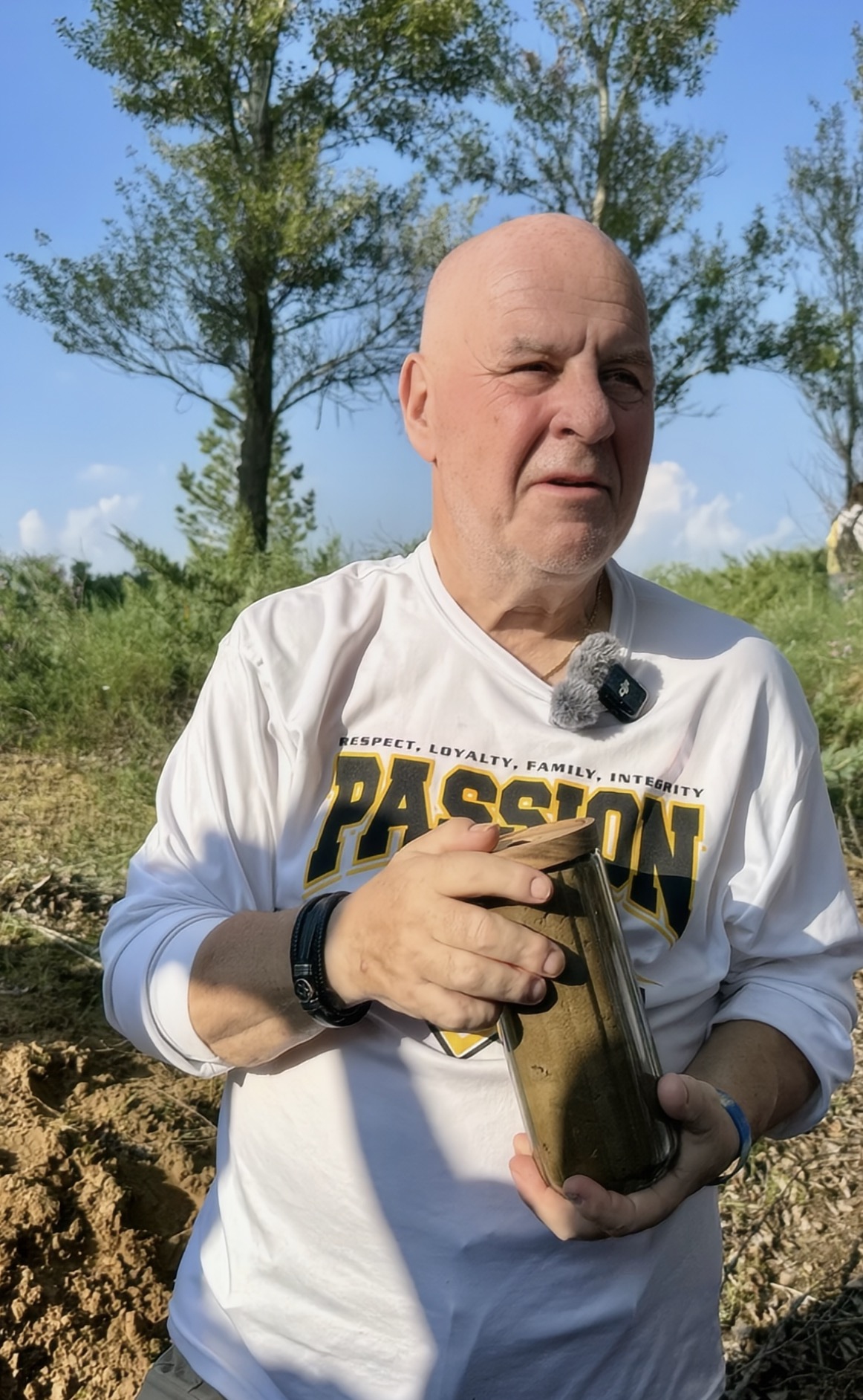
On Monday afternoon, Ronald Sakolsky, an American teacher, set foot once again on the soil of the Mu Us Desert, in the Uxin Banner of Ordos, North China’s Inner Mongolia Autonomous Region. He first came here in 2000. Back then, the land was little more than drifting sand. Today, it is green with trees – a transformation driven by decades of local effort.
He stood within Sakolsky Forest, a woodland formally named to honor his early donation toward local ecological restoration. There, he carried out a plan he had held long before this trip: filling a jar with sand from the desert to bring home to the US.
More than two decades ago, sand was the one thing this place had in abundance. In 1999, when Sakolsky arrived in China as a participant in a bilateral teacher exchange program, he was moved by the tireless efforts of Chinese desert fighter Yin Yuzhen and her husband to curb desertification in the Mu Us Desert. He raised $5,000 – equivalent in 1999 to three years of income for Yin’s entire family – to fund their local tree-planting initiative.
The young saplings bought with that donation have since matured into more than 50,000 full-grown trees, transforming the once desolate, sandy wasteland into a thriving green landscape.
When Sakolsky met Yin at the airport on Sunday, 26 years after his first visit to Inner Mongolia, he joked that he could not take a tree from the Mu Us Desert, but he could slip some sand into his shoes and carry a piece of the land back with him. Now, he had found exactly the sand he wanted – not just any sand, but from a place where persistence had turned desert into life, and where his own name had become part of that story.
“Promise is a promise,” he said. “Ms. Yin made a promise, and she fulfilled it.”
For Sakolsky, the sand is not just dirt. It is a metaphor, a bridge, a shared ground. He plans to tell his grandchildren what it means. “It’s not just a piece of sand in the jar,” he said. “It’s a jar of love.”
He used the jar of sand to symbolize that America and China share a relationship rooted in the same soil. He shook the jar, holding its two ends as if they were the two countries, and said that it shows we’re all on the same planet.
There is an old American joke, he noted, that if you dig a hole deep enough, you will eventually reach China. “We’re all on the same planet,” he said.
Earlier that day, while visiting Yin’s home, he spoke about the need for Americans and Chinese to see each other as family. “All Americans should understand that Chinese people and Americans can be family,” he said. “We can transcend differences if we focus on our common ground. We all love our countries, and we all value loyalty and respect – these are the shared virtues we hold dear.”
As for the sand he collected, Sakolsky said he would treat it as a treasure, alongside all his other precious keepsakes from China. He expects to display it in his living room – a daily reminder of the forest that carries his name and the people who made it grow.
。
Current article:http://x2f.shuazhepenxingshuaisenqienai.buzz/dh6n0b/20260826/1234.html
Published on:10:21:04
- 22956限时一口价10.99万元起!大众途岳购车政策发布
- 692034《郡县联播》:安全生产治本攻坚三年行动共排查重大隐患8.1万项
- 2591253D打印鞋从概念产品迈入小规模商业化阶段
- 654王嘉尔正式宣布“MAGICMAN 2”世界巡演内地场次:北京、上海、南京、杭州、重庆、宁波
- 80654福州汤边社区儿童友好经验获全国推广
- 281告别打怪刷本!米哈游生活模拟游戏《星布谷地》官宣2026年冬季上线
- 45679【经开子语】—2025年寒假放假通知及致家长的一封信
- 21336高温和干旱冲击欧洲电力供应系统
- 3319王庆海主持召开市政府全体(扩大)会议
- 749【丁荷·趣】楼梯上的“折叠”餐厅——枣园中二班项目活动
- 93536批量涨停!机器人迎“破晓时刻”,全年产量有望破10万台
- 860577022岁男子篮球赛中突然倒地离世,父亲在直播中目睹
- 22707可重构光学算术逻辑单元芯片研制成功
- 6230奇瑞集团5月销售汽车20.6万辆 同比增长9.1%
- 468881内存危机冲击波持续,多款高端手机涨价超1000元
- 6288485首创期货:成本下行,瓶片、短纤期价随之调整
- 4172发展气候康养,得迈过这些“坎儿”,发展气候康养,得迈过这些“坎儿”
- 982294"粥饼伦"首个店铺闭店:房租贵到受不了!房东也想分钱?
- 6543700湖北体彩孝感分中心“益起看球”走进安陆乡超赛场
- 4115208自动门挡不住鸽子?鸟儿仍闯入碗碟回收处觅食
- 128412서울시, 9월 수도요금 체납 집중정리…55억 규모
- 3946見る機会の減った「2000円札」が12万5000円に大化け!これから“さらに価値が上がりそう”な紙幣とは?
我的网站热门国内
- Copyright @ 2016-2017 我的网站 版权所有